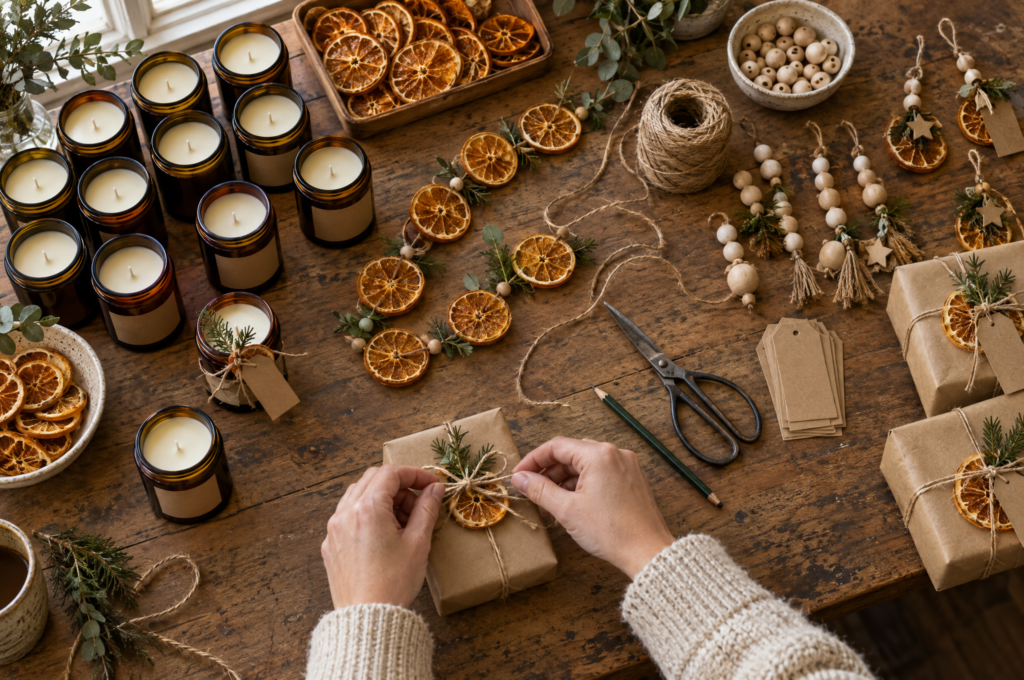

At a Glance: DIY Crafts to Sell at Holiday Markets
- 20 gifts that sell. Ornaments, coasters, keychains, jewelry, pouches and wreaths, each with a step-by-step tutorial.
- Prices that cover your table. A simple way to price each piece so the fee gets paid first.
- A booth people stop at. Height, clear prices, bundles and a second set of hands.
These DIY crafts to sell are small, giftable and quick to batch, which is what holiday shoppers grab. Most cost a few dollars in supplies and take an evening or two. Want the plan first? Start with how to get ready. Ready to make stock? Jump to the gear that helps or straight to the 20 ideas.
Holiday fairs run from November into mid-December. That gives you a few weekends to make stock, price it and set up a table that sells. Get those three right and you’ll head home with lighter bins.
What DIY crafts sell best at holiday markets?
Holiday shoppers are mostly buying for someone else. Think teacher gifts, stocking stuffers, a neighbor or a coworker. So the DIY crafts to sell that move fastest share a few traits.
- Small and giftable. It fits in a stocking or a gift bag.
- Easy to choose. A shopper can pick one in a few seconds.
- Personal. A name, a photo, a color or a little hand-done detail.
- Light on your wallet. Low supply cost, so a fair price still leaves room for profit.
Big pieces can sell too. They just sell slower, so bring a few and let the small stuff carry the day.
What do you need for your first holiday craft fair?
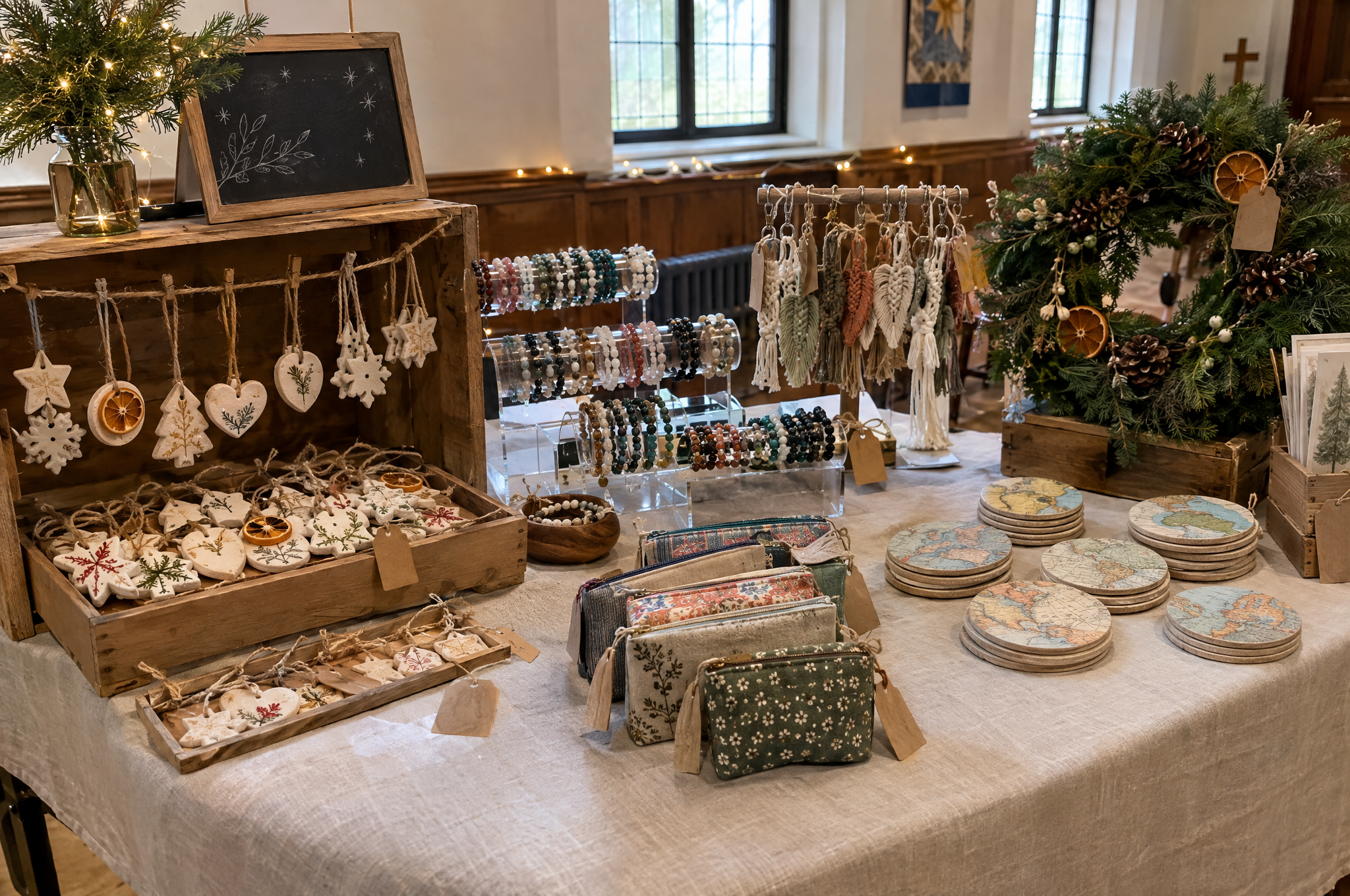
Enough for one 6 foot table
Some links in this section go to Amazon. As an Amazon Associate, we earn from qualifying purchases at no extra cost to you.
- Your stock. Three to five products, with the most of your best seller.
- A tablecloth to the floor. It hides your bins and looks finished.
- Something for height. Crates, a small shelf or clear display risers.
- Price tags or stickers. Every item needs a price shoppers can see.
- A sign. Your shop name, plus a short line like “great teacher gifts.”
- A way to take cards. A phone card reader, plus some cash for change.
- Bags and a little tissue. Shoppers carry more when you hand them a bag. A kraft thank you tag on each bag is a sweet finish.
Quick tip: Set your whole table up at home first. Take a photo of it so setup day is fast.
How do you get ready to sell at a holiday craft fair?
This is the simple plan that works for most first-timers and repeat sellers.
1. Pick three to five products
Choose DIY crafts to sell that you can make well and fast. A tight mix looks like a real shop. A table of 30 one-offs looks like a yard sale.
2. Make a batch of each
Work in batches, one step at a time across every piece. Cut all the clay, then paint all the clay, then seal all the clay. It’s faster than finishing one piece at a time. Make the most of whatever you think will sell best.
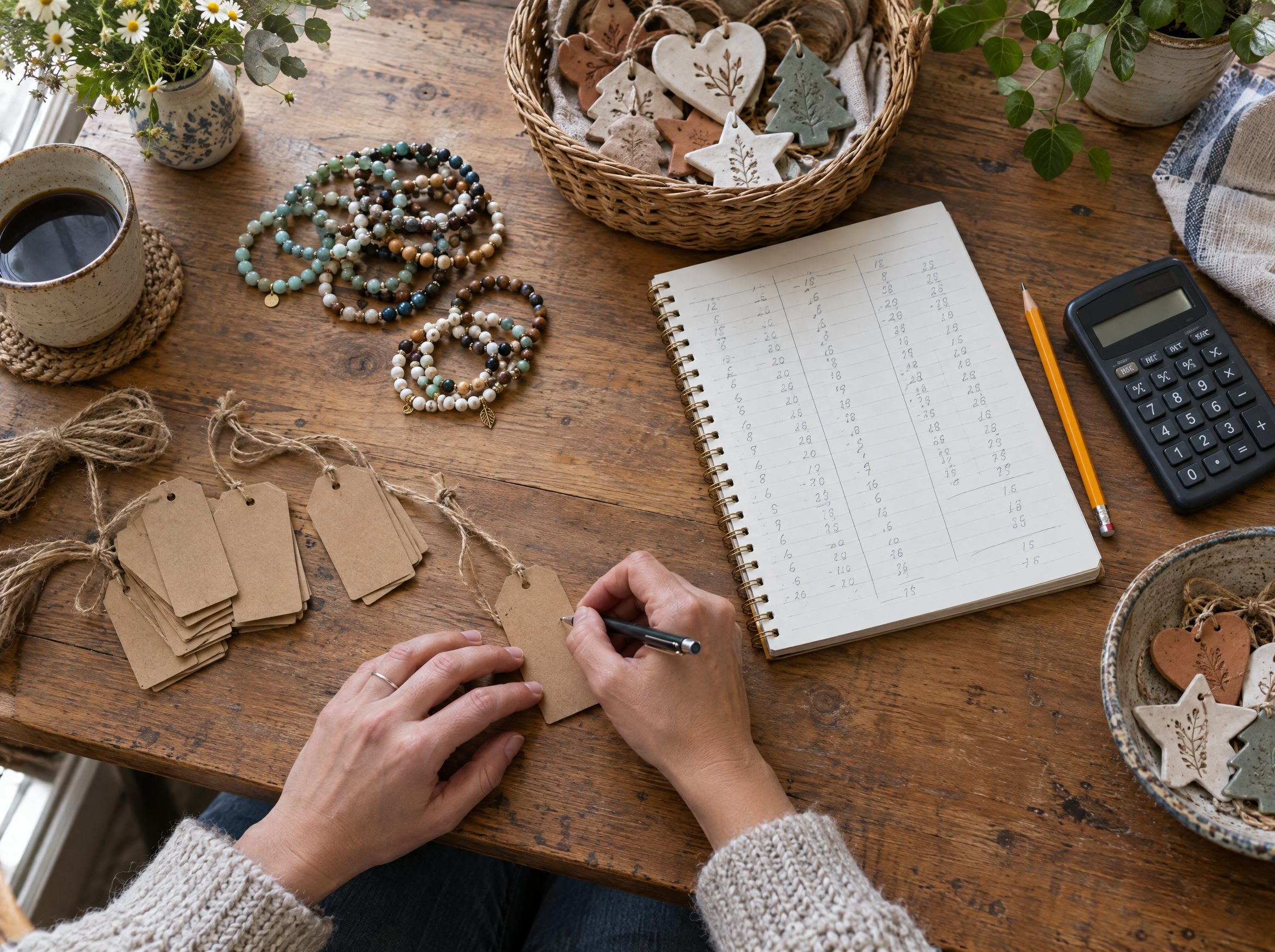
3. Price to cover the table first
Add up the supplies for one piece. Add your time at an hourly rate you’d be happy with. Then add a small share of the table fee. Here’s a planning example: $2 in supplies plus 15 minutes at $16 an hour is $6, so an $8 price leaves room for the fee and a little profit.
Offer a bundle instead of haggling. Something like “2 for $14” moves more pieces and keeps your prices firm.
4. Plan your table
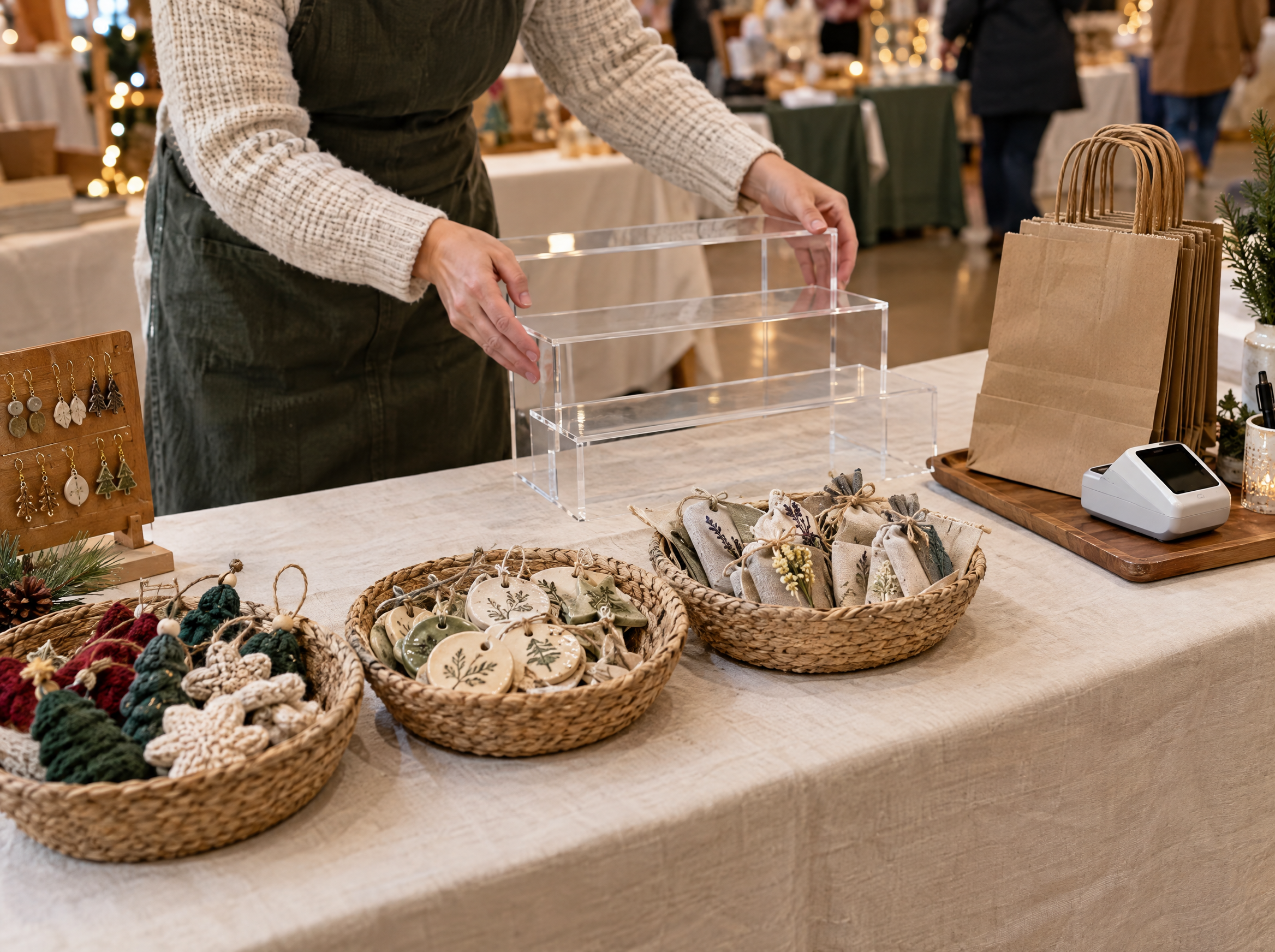
Put tall pieces at the back and small grab items at the front edge. Group items by type so shoppers can scan. Keep a clear spot for paying and bagging.
5. Set up to get paid
Test your card reader at home. Bring small bills for change. Keep cash on you, not in an open box.
6. Bring a helper
A second person covers breaks and the busy rush. They also keep an eye on the table while you talk to shoppers.
What are two easy mistakes to skip?
Don’t price only for the materials. A $3 keychain might sell out and still not pay the table fee. Run the quick math in step 3 for every product before the fair.
Don’t leave shoppers guessing. No price tags, no sign and nothing at eye level means people walk past. Put a price on everything, add height, and stand up when someone stops.
What gear makes a craft fair table look like a shop?
Here’s what makes the biggest difference. Height and clear prices do more than a fancy tablecloth. Shoppers stop when they can see your items at eye level and know the price without asking.
These clear risers turn a flat table into a little shop. Use them for ornaments, jewelry cards and small gifts. Skip them if you already have crates or a small shelf that works.
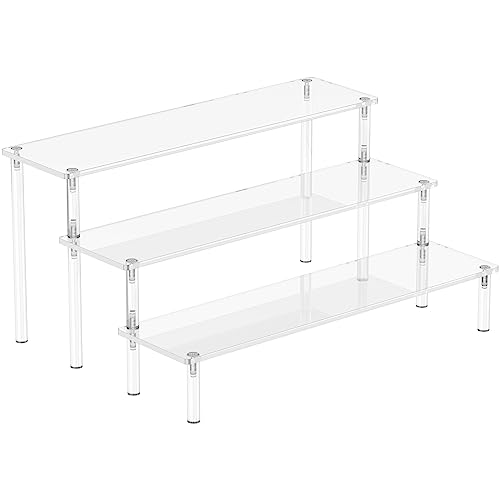
- Acrylic Riser Display: This is a unique and elegant acrylic display riser, its simple yet attractive...
- Durable And Sturdy: Different from inferior wood and metal, our display shelves is made of...
This post contains affiliate links. If you buy through them, we may earn a small commission at no extra cost to you.
Kraft thank you tags tied with twine make every bag feel like a gift. Tie one on at checkout. They come printed with a thank you, so you’ll still need plain tags or stickers for prices.

- Durable Kraft Gift Tags: Includes 150 tags (50 each in Black, White, and Brown), made from...
- 100 Feet Natural Jute Twine: Perfect for tying gift tags, decorating boxes, and adding a rustic...
This post contains affiliate links. If you buy through them, we may earn a small commission at no extra cost to you.
Which DIY crafts to sell should you make first?
Most of these DIY crafts to sell link to a full tutorial, and the last two have the steps right here. Pick three to five that you’d enjoy making in a batch.
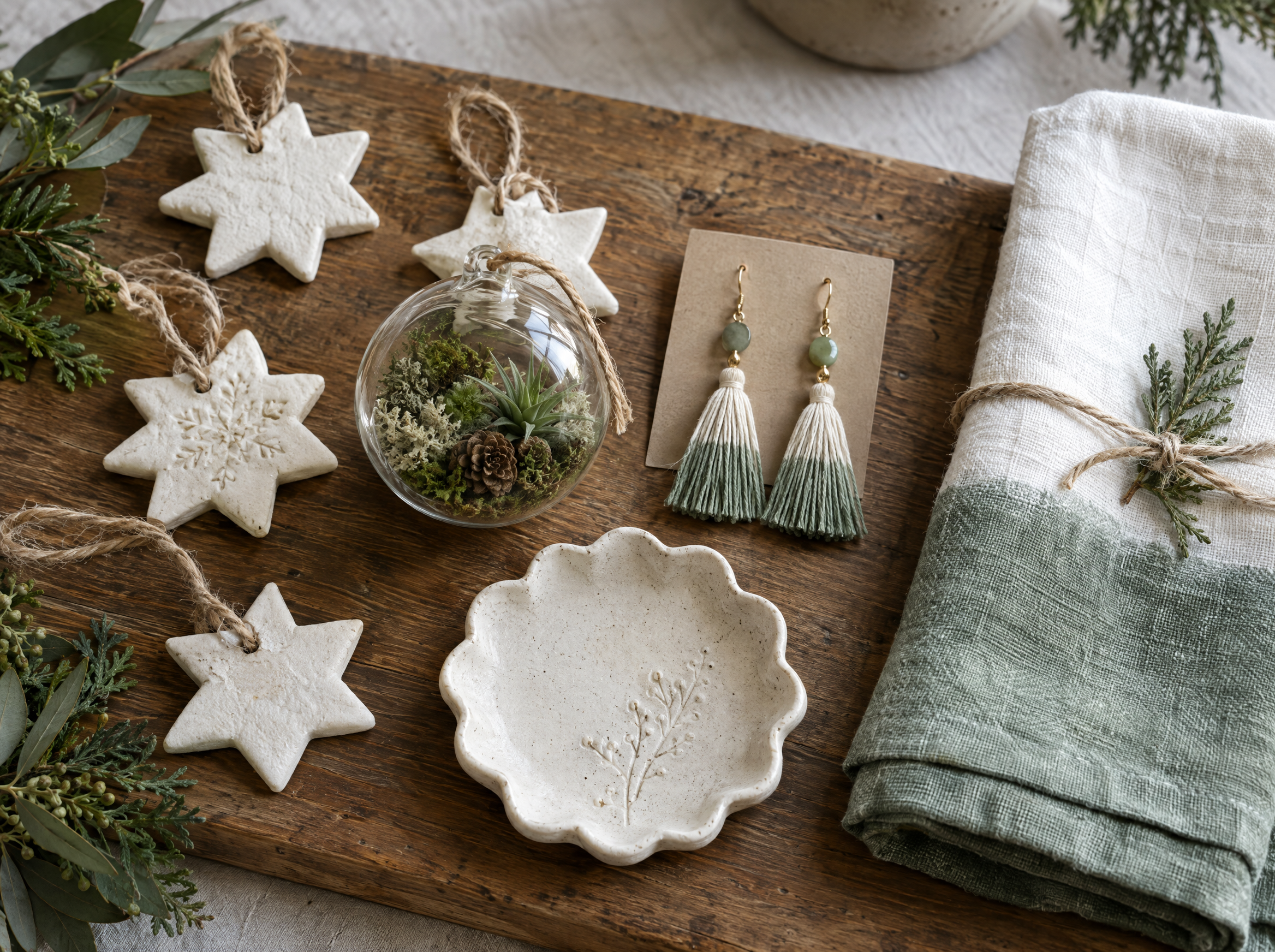
Want to see what really sold at a fair this season? This recap walks through best and worst sellers and what the maker would change.
1. Salt Dough Ornaments
Flour, salt and water make a cheap dough you cut with cookie cutters, bake and paint. Add a name or a year and they turn into keepsakes.
Skill: beginner, one evening plus drying. Get the tutorial.
2. Photo Ornaments
Shoppers love a little frame they can fill with a family photo. Sell them empty and show one filled as a sample.
Skill: beginner, one evening. Get the ideas.
3. Hanging Terrarium Ornaments
Tiny glass globes with a bit of greenery feel special on a tree. They’re a nice higher-priced piece to sit next to simpler ornaments.
Skill: beginner, one afternoon. Get the tutorial.
4. Handmade Wire Ornaments
Bent wire shapes are quick to make in a batch and weigh almost nothing. Hang a few at eye level so they catch the light.
Skill: beginner, one evening. Get the tutorial.
5. Gift Tags From Old Holiday Cards
Last year’s cards become this year’s tags with scissors, a hole punch and ribbon. Bundle them in sets as an easy add-on sale.
Skill: beginner, one evening. Get the tutorial.
6. Vintage Map Coasters
Map coasters make a thoughtful gift for travelers and new homeowners. Sell them as a set of four.
Skill: beginner, one afternoon. Get the tutorial.
7. Mini Pallet Coasters
Craft sticks and glue turn into tiny pallets in minutes. They’re a cheap, rustic gift that sells well in pairs.
Skill: beginner, one evening. Get the tutorial.
8. Macrame Keychains
Everyone has keys, so keychains are an easy grab item at the front of your table. Pick up a pack of keychain rings with clasps so every knot pattern gets finished the same way.
Skill: beginner, one evening. Get the patterns.
9. Beaded Bracelets
Bracelets stack, so shoppers often buy two or three. A clay bead bracelet kit gives you lots of colors to mix.
Skill: beginner, one evening. Get the ideas.
10. Tassel Earrings
Satin string or embroidery floss makes bright, light earrings. Mount each pair on a small card so it’s easy to hang and price.
Skill: beginner, one evening. Get the tutorial.
11. Polymer Clay Pendants
Oven-bake clay turns into pendants you can shape, stamp and color. A block of white polymer clay covers a whole batch.
Skill: beginner, one afternoon. Get the tutorial.
12. Easy DIY Necklaces
Simple necklaces sit well next to earrings and bracelets. A small jewelry corner helps shoppers build a gift set.
Skill: beginner to intermediate, one evening. Get the ideas.
13. Zippered Makeup Bags
Lined zipper pouches are useful all year, so they’re not stuck once the holidays end. Show one open so shoppers see the lining.
Skill: intermediate, one afternoon. Get the tutorial.
14. Fat Quarter Throw Pillows
A fat quarter bundle gives you a mix of prints for a stack of pillow covers. They’re a good larger piece to anchor your table.
Skill: beginner sewing, one afternoon. Get the tutorial.
15. Dip-Dyed Tea Towels
An ombre dip dye turns plain towels into a pretty hostess gift. Tie them in pairs with twine.
Skill: beginner, one afternoon plus drying. Get the tutorial.
16. Felt Ball Garland
Felt balls on a string make cheerful garland for trees, mantels and kids’ rooms. Hang one across the front of your table as a sample.
Skill: beginner, one evening. Get the tutorial.
17. Fabric Dog Collars
Pet owners shop for their dogs too. Sew collars in holiday prints and a few plain ones that work all year.
Skill: intermediate sewing, one afternoon. Get the tutorial.
18. Christmas Wreaths
A wreath is a showpiece that pulls people to your table. Start with a wire wreath frame and build from there.
Skill: intermediate, one afternoon per wreath. Get the ideas.
19. Scalloped Clay Trinket Trays
Roll air-dry clay to about 1/4 inch, cut a circle and pinch the edge into soft waves. Let it dry about 48 hours, then paint and seal it with a gloss sealer for a ceramic look.
Skill: beginner, a weekend with drying time.
20. Padded Pillow Picture Frames
Glue cotton batting to the front of a wooden frame. Pull fabric like cotton-linen or gingham tight over it, staple it at the back and tuck the corners neatly.
Skill: beginner, one evening.
How much does it cost to start selling at a craft fair?
Most DIY crafts to sell on this list cost a few dollars per piece. Your bigger costs are the table fee and your display. These are planning estimates for one table. Prices change, so check before you shop.
- Budget build, about $50. Supplies for a small batch of two or three products, tags and a tablecloth you already own.
- Mid range, about $150. More stock, risers or crates, a sign, bags and a phone card reader.
- Quality build, about $400. Full stock for four or five products, shelving, a printed banner, and a pop-up canopy with weights for outdoor markets.
What rules should you check before you sell?
Sales tax and local license rules vary by state and city. Ask the event organizer what they require, and check your state’s revenue office before the fair. If selling turns into steady income, a tax pro can help you set it up right.
Skip licensed characters, team logos and brand names. Those are trademarks, and they belong to someone else. Your own designs are safer, and they make better DIY crafts to sell anyway.
Where should you go next?
- Want even more DIY crafts to sell? Browse 57 easy crafts to make and sell.
- Need more help with pricing? Read how to calculate the retail price of DIY crafts.
- Want to sell after the fair is over? See selling crafts online.
Ready to fill your table?
Pick three of these DIY crafts to sell this weekend and make your first batch. Price each one with the quick math, tie on your tags and set up your table at home once. Then go meet your shoppers.
Your shareable result: take one straight-on photo of your full table before doors open. It’s the picture that shows how far you came.
Got your table set? Post your booth on Instagram, save your favorite ideas to Pinterest, and tell us how your first fair went on Facebook.
A few helpful answers
DIY crafts to sell FAQs
Pricing, booths and what to make first.
Small, giftable items you can make in batches. Ornaments, keychains, bracelets and coasters are easy to price and easy to grab. Bring a few larger pieces, like a wreath or a pillow, to pull people to your table.
Cover supplies, your time and a share of the table fee. Add those three, then round to a price that’s easy to say. Offer a simple bundle, like two for a set price, instead of haggling.
Bring a few products in depth, not lots of one-offs. Three to five products, with the most of your best seller, makes your table look like a shop. Write down what sells so you know what to make for the next fair.
It depends on your state and city. Sales tax and local license rules vary by place. Ask the organizer what they require, and check your state’s revenue office before the fair.
It’s safer to skip them. Characters, logos and brand names are trademarks that belong to someone else. Your own designs avoid that problem and help shoppers remember you.
A shopper at a holiday craft fair asks for a lower price on something handmade. Is haggling okay?
This one splits shoppers and sellers. Some see a friendly offer as part of the fun. Others say the tag price pays for the maker’s time.
Which side of the table were you on, and how did it go the last time a price came up?