
At a Glance
- Step-by-step DIY kitchen countertop refresh using countertop paint, the easiest method for first-timers
- Full tools and materials list, $50 to $80 for the paint method walked through here
- Quick look at all 5 popular methods so you know which to pick (and which to save for later)
Want to renovate your kitchen counter? Nowadays, a full kitchen renov runs $15,000 plus, according to Remodeling Magazine’s Cost vs. Value Report. If you don’t have that kind of budget, let me show you how to DIY this in a weekend for under $150. We’re walking you through it start to finish. Five methods folks use, why we’re picking one, and exactly how to pull it off.
What You’ll Need
Everything for this countertop paint refresh runs about $50 to $80 total. One trip to the hardware store covers it.
Tools: painter’s tape, drop cloth, lint-free rags, putty knife, caulk gun, 4-inch foam roller and tray, 2-inch angled paintbrush, 220-grit and 320-grit sandpaper, nitrile gloves.
Materials: dish soap or TSP substitute, kitchen-grade silicone caulk, bonding primer (Zinsser B-I-N or STIX work well), Rust-Oleum Countertop Paint, water-based polyurethane.
Optional: liquid deglosser ($10) skips the sanding step.
What’s the Cheapest Way to Refresh a Kitchen Countertop?
Five methods worth knowing about. Here’s the rundown so you know what’s out there before we dig in.
Contact paper. $20 to $40. Stick-on vinyl that fakes marble or wood. Cheapest, easiest, but it only lasts 1 to 2 years. Best for renters.
Countertop paint (Rust-Oleum). $40 to $60. A real paint kit made for kitchens. Solid color, lasts 3 to 5 years. Forgiving for beginners.
Tile paint. $30 to $50. Made for ceramic tile counters. Lasts 3 to 5 years.
Concrete overlay. $60 to $120. Trowel a thin layer of concrete over your existing counter. Modern look, lasts 5 to 8 years. Takes some skill.
Epoxy or stone-look kit (Giani Granite). $70 to $150. Multi-step kit with primer, sponged-on color, and a hard topcoat. Looks the most like real stone. Lasts 7 to 10 years. Most steps too.
Why Is Countertop Paint Best for Beginners?
For a first-time DIY kitchen countertop project, we’re picking countertop paint. Rust-Oleum Countertop Paint or a similar bonding-primer-plus-paint setup. Here’s why.
It’s the hardest one on the list to mess up. No sponge work. No epoxy mixing. Just clean, prime, paint, seal. It forgives small mistakes. It holds up three to five years even if your prep isn’t perfect. And it runs under $60 for the whole kit.
Nail this one and you’ve got the skills to step up to a stone-look kit next time.
3 Quick Checks Before You Start
1. Tape-pull test. Stick painter’s tape on the counter. Press hard. Peel it fast. If anything lifts up with the tape, your surface is shot. Strip it before you paint.
2. Seam check. Run your finger along every sink and backsplash seam. Soft caulk or a visible gap means re-caulk first. Painting over a leaky seam traps water and rots the substrate underneath.
3. Surface ID. Laminate, tile, or butcher block? Each preps a little different. Most paint kits work fine on laminate. Tile needs a tile-specific primer.
How Do You Paint Kitchen Countertops Step-by-Step?
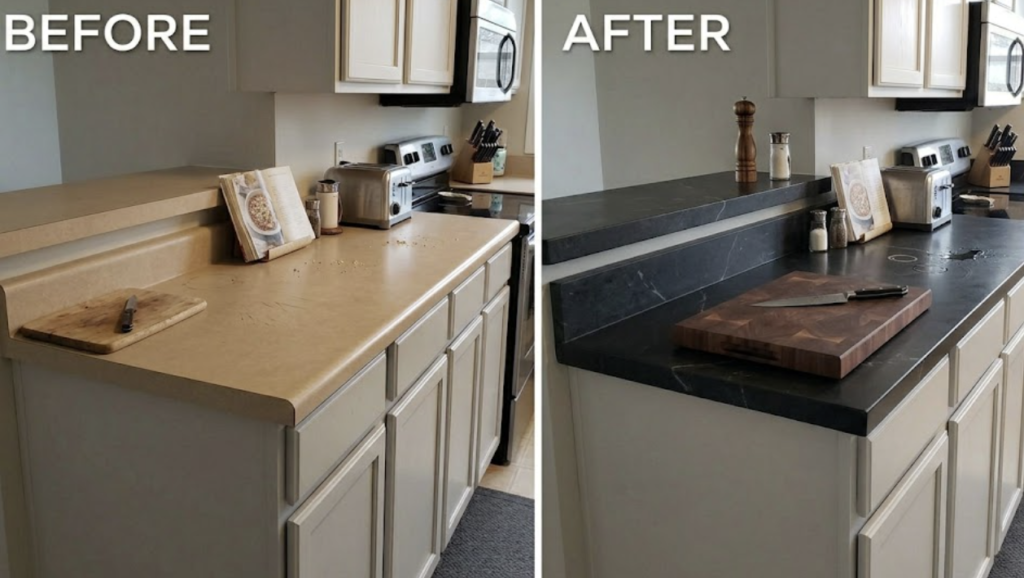
Step 1. Clear and clean. Pull everything off. Tape off or remove your sink hardware. Scrub the whole surface with dish soap or a TSP substitute. Rinse twice. Dry it all the way. Grease left behind kills the bond.
Step 2. Re-caulk every seam. Old caulk has to go. Slice it out with your putty knife. Wipe the seam clean. Run a fresh bead of silicone caulk. Smooth it with a wet finger. Let it cure 24 hours.
Step 3. Sand or degloss. Glossy laminate won’t hold paint. Light pass with 220-grit sandpaper. Or wipe on liquid deglosser if you want to skip the dust. Wipe everything down with a damp rag. Dry fully.
Step 4. Tape and cover. Tape your cabinet edges, sink rim, and backsplash line. Drop cloth over cabinets and floor. Drips set fast and don’t sand off.
Step 5. Prime. Bonding primer goes on first. Thin coat. Dry 4 hours. Don’t grab regular wall primer for this. You want bonding primer specifically.
Step 6. Paint. Two thin coats of countertop paint, 4 hours between. Watch for mud cracking. That’s a sign your coats are too thick. Painters’ rule of thumb: “Load the brush less, and move the paint into a thinner coat.” Thin coats every time.
Step 7. Topcoat. Two coats of water-based polyurethane. Light 320-grit sand between them. Final coat goes tip to tip in one direction. The topcoat is what makes it last years instead of months.
Step 8. Cure. 72 hours before you set anything down. 7 days before you cook on it. 30 days before you put heavy stuff back for good. Skipping the cure is the number one reason refreshes peel inside a month.
When Should You Skip DIY and Hire a Pro?
Stop right there if you see soft spots, swelling, or water staining underneath the surface. The substrate itself is past saving. No paint fixes a rotten counter. At that point you’re choosing between professional resurfacing ($300 to $600) and laminate replacement ($400 to $800 installed). Both still beat that $15K reno.
The Bottom Line
A DIY kitchen countertop refresh isn’t hard. It just punishes shortcuts. Prep right. Re-caulk every seam. Wait the full cure. Do those three things and you’ll get five years of fresh-looking kitchen out of one weekend and sixty bucks.
Save This for Refresh Day
Pin the steps to Pinterest so they’re on your phone at the hardware store. Tag us in your before-and-afters on Instagram. And come hang out with the rest of the crew on Facebook where folks swap their wins (and their oh-no moments).
FAQs
1. What is the cheapest DIY kitchen countertop refresh method? Contact paper at $20 to $40 is the cheapest option. Countertop paint at $40 to $60 lasts longer if you want a real refresh that holds up to daily cooking.
2. Does countertop epoxy really work and how long does it last? Yes, when applied right. Solid prep, the right mix ratio, and a 65 to 80°F room get you 7 to 10 years easy. Skip the prep and it’ll peel inside a year.
3. What is the best DIY kitchen countertop kit for beginners? Rust-Oleum Countertop Paint for solid colors and the easiest application. Giani Granite Kit if you want a stone look. Both are full systems in one box.
4. Can you paint laminate countertops without sanding? Yes, with liquid deglosser. Wipe it on, let it sit, wipe it off. It chemically dulls the surface so primer sticks. Same result as sanding, way less mess.
5. How do you keep DIY countertop paint from peeling? Three things. Full prep with a degloss step. Two thin topcoat layers, never one thick one. A real 7-day cure before normal use. Most peeling traces back to rushing the cure.
Quick Poll
Is DIY countertop paint actually worth it, or is it just a temporary fix you’ll regret?
Tell us why in the comments.