Quick Summary: Trending Resin Jewelry Techniques
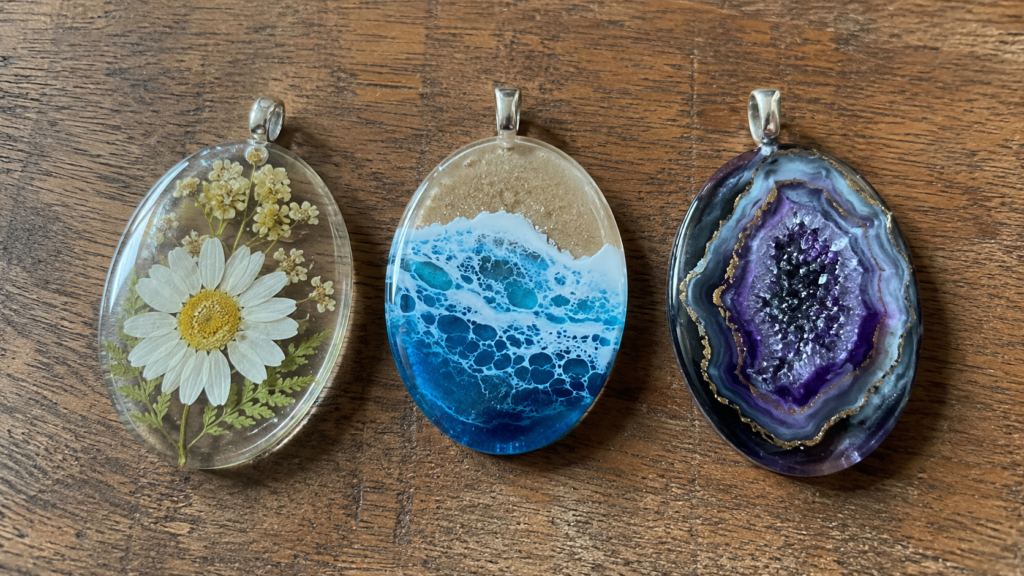
- Pressed flower resin remains one of the most requested styles for personalized pieces.
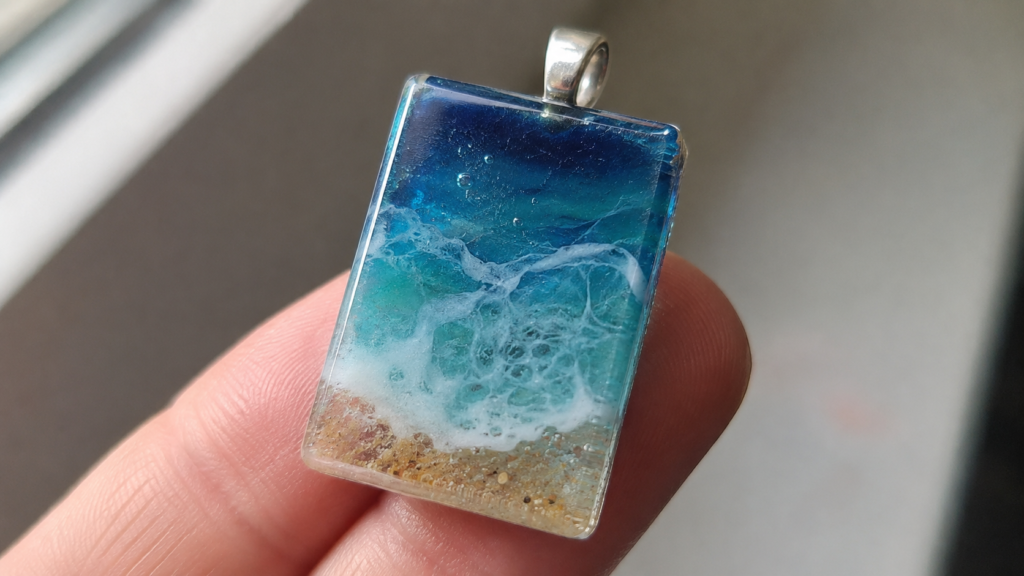
- Ocean pour techniques layer blues and whites to mimic waves and shorelines.
- Geode-style pours layer colored resin to look like a cut crystal or geode.
- A new technique only helps if it gives buyers a reason to pick your shop specifically.
- The techniques that sell best usually tie into a clear niche or color palette.
- Test a small batch and price for the extra time before adding a technique to your full lineup.
New resin techniques show up in your feed every few weeks. Ocean pours one month, geode pours the next, something else by fall. It’s easy to feel like you need to learn all of them just to keep up.
You don’t need to chase every trend that crosses your feed. A saturated market isn’t the real obstacle for most resin shops, and the same logic applies here. A new technique only helps if it gives a buyer a reason to pick your shop over the next one.
Attention and sales aren’t the same thing. A style everyone’s posting isn’t automatically a style everyone’s buying, and a technique nobody’s talking about yet can still sell well in the right shop.
Here are three trending techniques worth a look, and what each one actually does for a shop that’s trying to stand out.
Pressed Flower Resin: Still One of the Most Requested Styles
A buyer choosing a pressed flower pendant isn’t just choosing jewelry. She’s keeping something specific: a wedding bouquet, a garden she planted, a flower from a certain date.
That’s why it sells:
- It’s tied to a memory, not just an aesthetic.
- It works for gifts as easily as for the buyer herself.
- The personalization angle does more than the technique itself.
We’ve already covered the full technique elsewhere, including drying times, mold prep, and the moisture issues that cause cloudy pours. [Link: homemade-resin-jewelry-from-pressed-flowers] If you haven’t tried it yet, that’s the place to start.
Ocean Pour Resin: A Bigger Piece, A Bigger Price Point
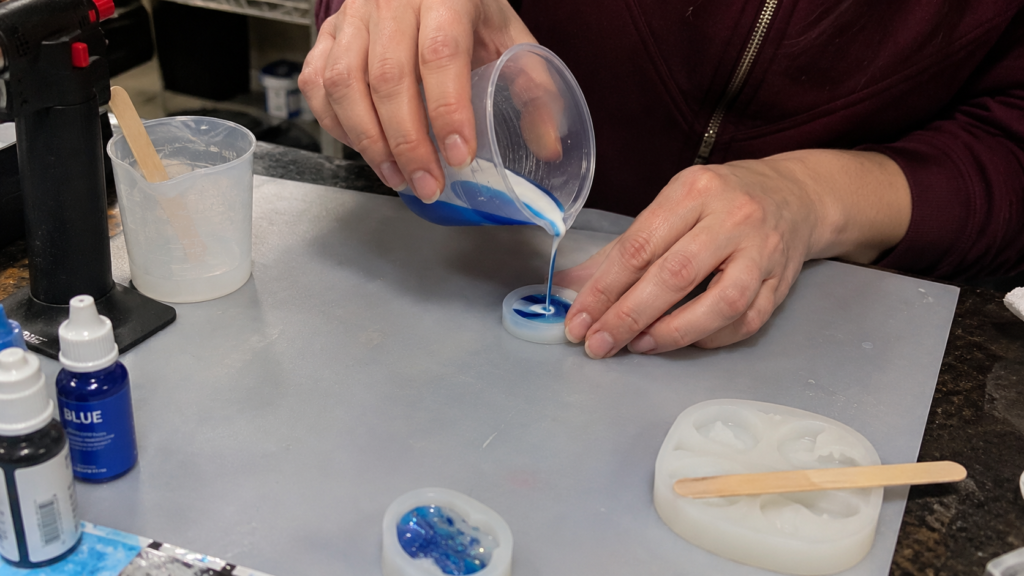
Ocean pour pieces layer blues and whites to mimic waves breaking against a shoreline, sometimes finished with a little sand or a few small shell pieces. Getting the layers to separate cleanly takes practice, and buyers can see that extra work even if they couldn’t explain the process.
That’s why it sells:
- The visible complexity supports a higher price than a simple pour.
- It fits naturally into a coastal or beachy shop identity.
- It reads as a statement piece rather than an everyday one.
If your shop already leans coastal, this technique fits an identity you likely have. If it doesn’t, one ocean piece added as a novelty won’t do much on its own.
Geode-Style Pours: Turning Color Into Your Signature
Geode-style pours layer colored resin, usually with mica powder or resin dye, to mimic a cut crystal or sliced geode. The colors run in veins instead of flat layers, so no two pieces come out quite the same even from the same palette.
That’s why it sells:
- A specific color combination becomes recognizable as your work.
- It’s harder to copy than a plain, single-color pendant.
- It gives a buyer something to remember your shop by.
A signature palette, deep teal and gold, or blush and silver, does more to stand out in search results than a plain clear pendant ever will.
A Technique Only Helps If It Answers One Question
Before adding a new technique, ask whether it deepens what your shop already stands for or just adds another item to the count. A coastal shop picking up ocean pours makes sense. A pressed-flower shop suddenly adding geode pieces with no connection to the rest of the shop can read as scattered.
None of this replaces the pricing and positioning work that actually gets a shop noticed. [Link: saturated-resin-jewelry-market] A geode pendant priced the same as a basic $12 pour, with no story behind the color choice, sells about as well as the basic pour did. The technique changes the product. It doesn’t change the decision a buyer makes when comparing your listing to the next one.
How to Test a New Technique Before You Commit
Three steps before you build a whole line around something new:
- Make a small batch first. Three to five pieces, not a full restock. See how the pour behaves in your hands before ordering more supplies.
- Watch what actually happens once those pieces are live. Does a buyer favorite it or ask about it, or does it sit next to your usual inventory unnoticed. That tells you more than how much you enjoyed making it.
- Price it for the time it actually takes. A basic pendant might take twenty minutes of hands-on time. A geode piece might take forty, plus a longer cure between layers. Price both the same and the geode piece quietly pays you half as much per hour.
Should You Offer More Than One Technique?
Some shops do well with a single technique done consistently. Others build a small collection, a signature palette in geode work alongside a few pressed flower pieces for buyers who want something more personal.
Either can work, but only if each technique earns its place. The risk with adding technique after technique is that your shop starts to look like it doesn’t know what it is.
If you offer more than one, look for a thread that connects them, whether that’s a consistent color story or a buyer they’re both built for. That way the shop still reads as one clear thing instead of several unrelated experiments.
Where This Fits
Trying a new technique can be genuinely fun, and that’s a fine reason to pick one up. Just don’t expect the technique alone to fix a shop that’s struggling on pricing or positioning.
If you haven’t run the numbers on what your pieces actually need to cost, our free profit calculator is a quick way to check before you invest time in a new technique. It’s also worth dropping into the community to see how other sellers are testing these styles in their own shops.
Conclusion
Pressed flowers, ocean pours, and geode-style pours are all worth trying if they fit the shop you’re already building. None of them are required, and none will fix slow sales on their own. Pick the one that matches your existing identity, test it small, and price it for the time it actually takes.
FAQ
What resin jewelry technique is trending right now?
Geode-style layered pours and ocean pour designs are both getting attention alongside pressed flower pieces, which have stayed popular for years.
Do I need to know multiple resin techniques to run a successful shop?
No. A shop with one technique done well and priced right often outperforms a shop juggling five techniques with no clear identity.
Is geode resin jewelry hard to make?
It takes practice to control how the colors separate and run, but it doesn’t require different tools than most layered pour techniques already use.
Will trying a new resin technique help my sales?
Only if it fits your shop’s identity and you price it to reflect the extra time. A new technique with no connection to your niche usually doesn’t move the needle much.
How do I know if a new technique is worth adding to my product line?
Test a small batch, watch whether buyers actually respond to it, and check that the price covers the extra time before committing supplies to a full line.
Should my shop offer multiple resin techniques or just one?
Either can work. What matters is whether the techniques connect to a clear identity or just make the shop feel scattered.