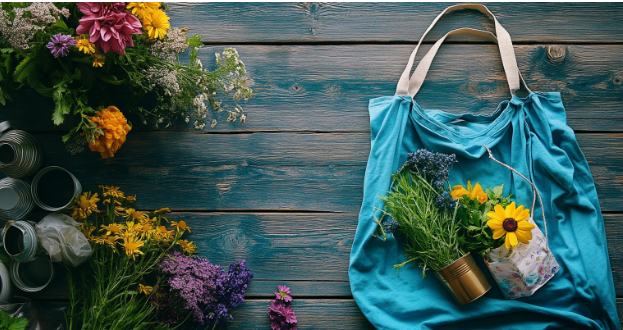
Earth Day is an annual reminder to be kinder to the planet. Instead of just talking about sustainability, why not take action? These Earth Day DIYs let you reduce waste by repurposing everyday materials. Each project is simple, budget-friendly, and helpful for the environment.
Easy Earth Day DIYs You Can Make at Home
Looking for simple ways to celebrate Earth Day? These DIY projects let you repurpose household items into something useful. Get ready to turn old materials into something new with these eco-friendly crafts!
Turn Old T-Shirts into Reusable Tote Bags 🛍️
Plastic bags cause severe pollution, with many ending up in oceans and harming marine life. Switching to reusable bags is a better option, and making one from an old t-shirt is a great way to start being eco-conscious.
How to Make a T-Shirt Tote Bag:
- Select a thick cotton t-shirt. A sturdier fabric will last longer.
- Cut off the sleeves and neckline to form handles.
- Turn the shirt inside out. Then, cut slits along the bottom edge.
- Tie each slit into a tight knot to close the bottom seam.
- Flip the bag right-side out, and it’s ready to use!
This simple DIY keeps fabric out of landfills and reduces plastic waste. According to the EPA, discarded textiles make up a large portion of landfill waste.
Upcycled Planters from Household Items 🪴
Instead of buying new plant containers, give old items a second life. Upcycled planters reduce waste while adding a creative touch to your home.
Household Items That Make Great Planters:
- Tin cans: Remove labels, paint the sides, and add drainage holes.
- Old boots: Fill the insides with soil and plant flowers for a unique display.
- Broken teacups: These work well for small succulents.
- Plastic bottles: Cut them in half and use them as hanging planters.
Indoor plants improve air quality and create a relaxing atmosphere. NASA research shows that houseplants can help remove toxins from the air.
DIY Beeswax Wraps for a Plastic-Free Kitchen 🍯
Plastic wrap is a major source of pollution. It’s non-biodegradable and harmful to wildlife. A sustainable alternative is beeswax wraps, which keep food fresh without creating waste.
Steps to Make Beeswax Wraps:
- Cut 100% cotton fabric into squares.
- Sprinkle grated beeswax evenly over the fabric.
- Place the fabric on a baking sheet lined with parchment paper.
- Bake at 200°F (93°C) for 4-5 minutes until the wax melts.
- Remove from the oven and spread the wax evenly with a brush.
- Let the wraps cool before using them to cover food.
Beeswax wraps last for months and reduce reliance on disposable plastic. After use, wash them with cold water and mild soap.
Cardboard Bird Feeders to Support Local Wildlife 🐦
Helping nature is one of the best ways to celebrate Earth Day. A DIY bird feeder made from cardboard repurposes recyclable materials to provide food for birds.
How to Make a Simple Bird Feeder:
- Cut a large opening in the side of a small cardboard box.
- Poke holes at the top and thread a string through for hanging.
- Spread peanut butter on the outside and roll it in birdseed.
- Fill the inside with more birdseed, then hang it from a tree.
This environmental-friendly feeder creates a safe spot for birds. Small changes like this help support biodiversity and local ecosystems.
Celebrate Sustainability with Earth Day DIYs
These Earth Day DIYs prove that small efforts can make a big difference. Whether you’re upcycling t-shirts, repurposing containers, or eliminating plastic wrap, each project helps reduce waste.
This April 22, try one of these eco-friendly crafts. After all, even a small step toward sustainability can produce a lasting impact.
Which project are you most excited to try? Leave a comment below and share your thoughts!
FAQs
1. Why should I make DIY projects for Earth Day?
DIY projects help reduce waste, encourage creativity, and promote sustainable habits.
2. What materials are best for upcycling?
Old clothing, tin cans, cardboard, plastic bottles, and glass jars are great materials to repurpose.
3. How do beeswax wraps compare to plastic wrap?
Beeswax wraps are reusable, biodegradable, and free from harmful chemicals. They help keep food fresh without waste.
4. Can kids participate in these projects?
Yes! Making bird feeders, tote bags, and upcycled planters are safe and fun activities for kids.
5. What paint should I use for upcycled planters?
Acrylic or spray paint works best for metal, plastic, and ceramic surfaces. Choose non-toxic, eco-friendly options.
6. How long do beeswax wraps last?
With proper care, they can last six months to a year.
7. Can I compost old beeswax wraps?
Yes! Cut them into strips and add them to a compost bin.
8. What’s the easiest Earth Day DIY for beginners?
Making a t-shirt tote bag is the simplest project—no sewing required!
9. How can I encourage others to try these projects?
Share your creations on social media, host a DIY workshop, or gift handmade items to friends.
10. Where can I find more eco-friendly craft ideas?
Check out resources from the EPA or follow sustainability blogs for inspiration.