Spring brings longer days, blooming flowers, and the cheerful singing of birds. As such, it’s the perfect time to start a creative family project! If you’re looking for an easy, hands-on activity, DIY birdhouses are a wonderful way to bond with your children and help local birds as well. With just a few basic materials, you can build bird shelters that invite wildlife into your backyard. Plus, it’s an excellent opportunity to teach kids about nature, patience, and craftsmanship. So, grab your tools and let’s get started!
Why Build DIY Birdhouses with Kids?
Making DIY birdhouses is more than just a fun craft. It encourages creativity, problem-solving, and an appreciation for wildlife. Here’s why your family will love this project:
- Improves hand-eye coordination and fine motor skills.
- Introduces kids to different bird species and their nesting habits.
- Provides a sense of accomplishment when birds move in.
- Encourages outdoor play for kids and reduces their screen time.
Beyond the learning experience, seeing birds settle into a homemade house is incredibly rewarding.
Build, Decorate, and Watch Nature Move In!
Are you looking for a fun, hands-on activity with your kids this spring? Building a DIY birdhouse is the perfect way to spark creativity while inviting nature into your backyard. Best of all, this project is easy, engaging, and full of learning opportunities. Ready to get started? Let’s build!
Step 1: Gather Your Supplies
Before starting, make sure you have everything needed for a simple yet sturdy birdhouse:
- Wooden boards (cedar, pine, or recycled wood)
- Hammer and nails (or wood glue for young children)
- Drill and screws
- Hole saw or jigsaw (to create an entrance)
- Non-toxic outdoor paint or markers
- Hinges or hooks (for easy cleaning)
For a more eco-friendly approach, repurpose an old wooden box or thick cardboard. According to The National Wildlife Federation, untreated wood is the safest choice for birds.
Step 2: Cut and Assemble the Birdhouse
Now, it’s time to bring the birdhouse to life! If you’re working with young children, pre-cut the wooden panels for easier assembly.
- Cut the panels – You’ll need six pieces: a front, back, two sides, a base, and a roof. The front panel should have a 1.5-inch hole for small birds like chickadees and wrens.
- Assemble the structure – Attach the sides, front, and back panels using nails or strong wood glue. Let kids help by holding pieces steady.
- Secure the roof and base – Fasten the bottom and top panels. Use hinges on one side of the roof if possible, for easy cleaning.
- Smooth rough edges – Sand any splinters or sharp spots to make the birdhouse safe for both kids and birds.
Step 3: Add Color and Personality
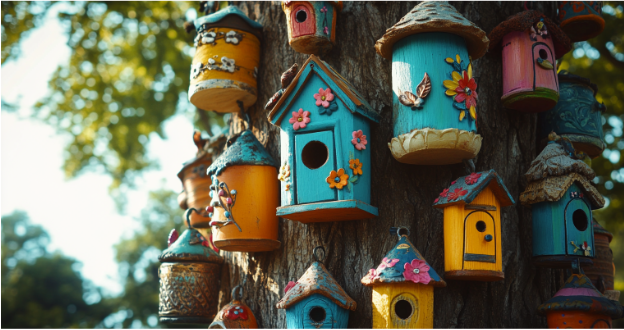
Now comes the most exciting part—decorating! Kids love adding their unique touch, so encourage them to get creative. Use non-toxic, weather-resistant paint for durability.
Here are some fun decorating ideas:
- Nature themes – Paint flowers, vines, or soft sky tones for a natural look.
- Bright colors – Yellow, blue, and orange attract more birds.
- Personalized touches – Let kids add their names, fun patterns, or playful designs.
According to Bird Watching HQ, natural tones help the birdhouse blend into the environment, while vibrant shades may attract curious visitors.
Step 4: Find the Perfect Spot
Once your DIY birdhouse is dry, it’s time to place it where birds will feel safe. Follow these simple guidelines:
- Mount it at least five feet off the ground to protect birds from predators.
- Choose a shaded, quiet location away from heavy foot traffic.
- Face the entrance away from strong winds to keep the interior cozy.
- Secure it to a tree, post, or fence for stability.
If you want to attract specific birds, research their nesting preferences. Wrens prefer hidden spots, while bluebirds favor open areas.
Step 5: Observe and Enjoy!
Now comes the fun part—watching birds settle into their new home! Be patient, as it may take a few weeks before they arrive. Consider adding a small bird feeder or birdbath nearby to make your yard even more inviting.
Encourage kids to keep a bird journal, sketch the different species they see, and note their behaviors. According to The Audubon Society, maintaining a bird-friendly habitat increases the chances of long-term visitors.
Build Memories with DIY Birdhouses
Creating DIY birdhouses is more than just a weekend project—it’s a meaningful way to bond as a family while giving birds a safe place to nest. With a little effort and creativity, your backyard can become a lively haven for feathered friends. Plus, the joy of seeing our feathered friends move in makes all the effort worthwhile!
Are you ready to start building? Let us know how your DIY birdhouses turned out in the comments below!
FAQs
1. What type of wood should I use for a birdhouse?
Cedar, pine, or reclaimed wood works well. Avoid pressure-treated wood since it contains chemicals that can harm birds.
2. How big should the entrance hole be?
A 1.5-inch hole is ideal for small birds like wrens, chickadees, and bluebirds. Larger birds may require a bigger opening.
3. Should I use nails or glue?
Nails are more durable, but wood glue works well for younger children who may struggle with hammers. Use waterproof glue for outdoor durability.
4. Should I add a perch to the birdhouse?
No. Perches make it easier for predators to access the nest. Birds can enter without one.
5. Where should I place my birdhouse?
In a quiet, shaded area, at least five feet above the ground. Make sure it’s away from busy walkways or predators.
6. How often should I clean my birdhouse?
Clean it out after each nesting season to remove old materials and prevent pests.
7. What paint is safe for birdhouses?
Use non-toxic, outdoor-safe paint. Avoid painting the interior, as birds prefer natural wood inside.
8. How do I attract birds to the birdhouse?
Adding a nearby feeder, birdbath, or native plants can help birds find their new home.
9. What birds are most likely to use a birdhouse?
Chickadees, wrens, bluebirds, sparrows, and finches are common visitors.
10. What should I do if no birds move in?
Be patient! It may take time for birds to find the house. Try adjusting its location if needed.