
At a Glance: 3 Woodworking Toy Projects for Kids and Parents
- Three complete parent-kid builds: a Minecraft figure, a wooden robot, and an interlocking dino toy.
- Every step is role-assigned so kids stay safe and parents stay sane.
- Free downloadable plan PDFs included for all three projects.
3 Woodworking Toy Projects You and Your Kid Can Build This Weekend
Some of the best time you’ll spend with your kid isn’t at a theme park or in front of a screen. It’s standing side by side at a workbench, turning a plain piece of pine into something they helped build with their own hands.
These three woodworking toy projects are designed exactly for that. Each project comes with a full materials list, cut list, and step-by-step instructions with roles clearly assigned. And the teamwork moments? Those are the ones you’ll both remember. We’ve also put together free downloadable plan PDFs for every single project below. Print them out, stick them on the workbench, and you’re ready to go.
Let’s start building.
Project 1: Minecraft Steve Wooden Figure
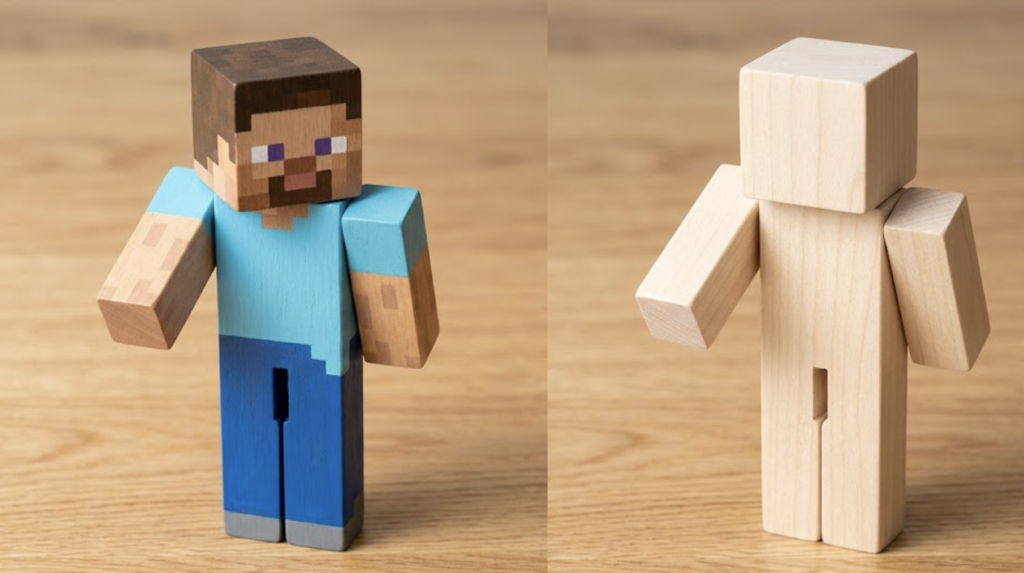
There’s a good chance your kid already knows exactly what this minecraft character is supposed to look like. That makes it the perfect first build. They’ve got a vision. Your job is to help them pull it off.
This pocket-sized Minecraft figure stands about 6.25 inches tall and uses basic hobby lumber you can grab at any hardware store. The joints use wood dowels so the head and arms can actually move, just like the game.
Materials
- 1.5″ × 1.5″ basswood or poplar turning square (head)
- 1×2 select poplar hobby board (torso + legs)
- 1/2″ × 2″ select poplar hobby board (arms)
- 1/4″ hardwood dowel pin (~6″ total)
- Titebond II wood glue
- Acrylic hobby paints
- Sandpaper (120, 220, 320-grit)
- Combination square + 0.5mm mechanical pencil
- Painter’s tape
Cut List
| Part | Qty | Dimensions |
| Head | 1 | 1.5″ × 1.5″ × 1.5″ |
| Torso | 1 | 0.75″ × 1.5″ × 2.25″ |
| Legs block | 1 | 0.75″ × 1.5″ × 2.5″ |
| Arms | 2 | 0.5″ × 0.5″ × 2.25″ |
Before you head to the lumber yard, run your cut list through our free Cut List Optimizer. It lays out every piece on your plywood sheet so you get the most out of every board and avoid wasting wood.
Steps
- Mark cut lines at 1.5″, 2.25″, and 2.5″ on your board. (parent + kid)
- Cut all blocks to size along the marked lines. (parent only)
- Clamp the leg block and cut a center kerf slot, stopping 1/4″ from the top. (parent only)
- Drill 1/4″ dowel holes into the head bottom, torso top, and arm shoulders. (parent only)
- Sand all faces with 180-grit, then 220-grit until smooth. (kid)
- Brush glue onto the leg block top, stack the torso on, and clamp for 30 minutes. (parent + kid)
- Press dowel pins into joints, then tape off sections and paint. (kid)
📄 Want the full tutorial with exact dimensions, drill depths, and a printable cut list? Download the free Minecraft figure plan PDF here.
I grabbed this Apple Barrel set after seeing thousands of parents rave about it, and it’s been an absolute game-changer for weekend projects with my kid. It goes on like absolute butter and dries so fast that even my chaotic little artist couldn’t smudge the flawless finish!
No products found.
Project 2: Wooden Robot Toy
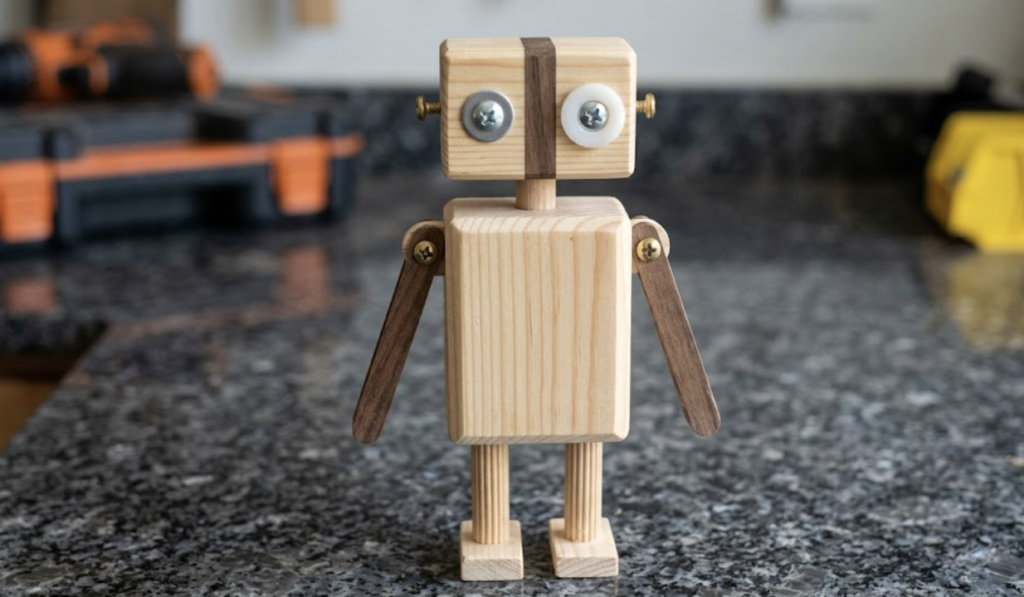
This one’s got personality. The wooden robot is made of scrap pine blocks, a handful of hardware store fasteners, and a dark wood accent strip to build a little guy that actually has articulated arms, screw-bolt eyes, and brass ear details.
It’s pocket-sized, about 14 to 15 cm tall, and the hardware bits make it feel like a real workshop creation rather than a craft project. Kids love picking out the washers and bolts that become the eyes. No two robots ever look exactly the same.
Materials
- Pine or fir craft blocks/scraps (~2cm / 3/4″ thick) — body + head
- Dark wood strip (walnut, mahogany, or stained pine) — face accent
- Thin pine lattice strips — arms
- 1cm round wood dowel — legs
- 2 assorted screws + washers — eyes
- 2 small brass eye-screws or thumbscrews — ears
- 2 pan-head screws — arm joints
- Non-toxic wood glue
- Sandpaper (120 and 220-grit)
Cut List
| Part | Material | Qty | Dimensions |
| Head (left/right) | Pine block | 2 | 2.1 × 3.0 cm |
| Head accent | Dark wood strip | 1 | 0.5 × 3.0 cm |
| Torso | Pine block | 1 | 3.5 × 6.0 cm |
| Neck | Dowel/block | 1 | 1.0 × 1.0 cm |
| Arms | Thin wood strip | 2 | 0.5 × 5.5 cm |
| Legs | Round dowel | 2 | 1.0cm dia. × 4.0 cm |
| Feet | Pine block | 2 | 1.5 × 2.5 cm |
Steps
- Measure and mark all dimensions onto your pine blocks. (parent + kid)
- Cut all blocks to size. Keep kids 3 to 5 feet back with eye protection on. (parent only)
- Sand all edges with 120-grit, then round the torso corners with 220-grit. (kid)
- Drill dowel holes into the torso bottom and foot tops. Drill pilot holes for eyes and arms. (parent only)
- Glue the head sandwich layers together and clamp flat. Insert neck and leg dowels with a dab of glue. Wipe excess with a damp sponge. (parent + kid)
- Let the kid pick the washers and bolts for eyes. Parent drives screws through arm links and ears to keep them articulated. (parent + kid)
- Rub beeswax or food-grade mineral oil onto the finished robot with a cotton rag. (kid)
📄 Want the full tutorial with exact drill depths, hardware specs, and a printable cut list? Download the free robot toy plan PDF here.
To save you from a frustrating afternoon of hunting down massive contractor packs of tiny screws and non-toxic materials, here’s a lineup of items I got before making this project with my kid:
Table could not be displayed.Project 3: Interlocking Dino Toy
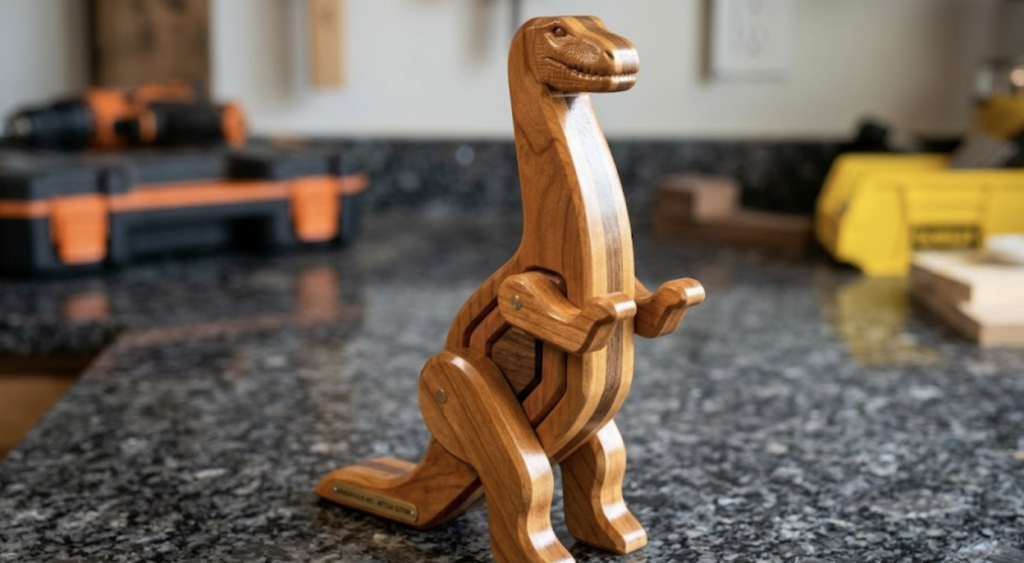
No glue. No nails. Just two pieces of wood that slot together and stand on their own. That’s the magic of this interlocking dinosaur build, and it never gets old watching a kid slide the legs into the body for the first time and see the whole thing stand up.
The body comes from 3/4″ stock. The legs come from 1/2″ stock. The slots hold everything together with light friction, which means your kid can take it apart and put it back together as many times as they want.
Materials
- 3/4″ thick cherry or poplar board (approx. 12″ × 12″) — body
- 1/2″ thick matching board (approx. 6″ × 12″) — legs
- Dinosaur template (printed)
- Blue painter’s tape
- Glue stick or spray adhesive
- Food-grade mineral oil or beeswax paste
- Sandpaper (120, 220, 400-grit)
- Foam or rubber sanding blocks
- Clean cotton rags or sponge brushes
Steps
- Print out the layout pages at 100% “Actual Size” scaling. Let your kid cut out the paper dinosaur parts with safety scissors. (parent)
- Pick the best-looking side of each board together. Confirm grain runs horizontally along the body and tail. (parent + kid)
- Cover boards with painter’s tape and glue the template flat on top. (kid)
- Cut outer body lines from 3/4″ stock and leg pieces from 1/2″ stock. Cut slightly inside slot lines to keep joints snug. Kids stay 5 feet back with PPE on. (parent only)
- Quick-pass rough edges with 120-grit to clear burrs and splinters. (parent)
- Sand all flat faces with a 220-grit block in long, grain-direction strokes. Lightly round the corners. (kid)
- Test-fit legs into body slots. File or sand slots wider if pieces don’t slide together with light friction. (parent + kid)
- Wipe all sawdust from wood pores with a clean rag. (parent)
- Apply mineral oil or beeswax all over with a sponge or rag. Let sit 15 minutes, then buff dry. (kid)
📄 Want the full tutorial with the printable dino template, slot tolerances, and grain alignment tips? Download the free dino toy plan PDF here.
I didn’t have the time to track all of the materials down at a local hobby shop. I ended up grabbing all these exact budget-friendly essentials right here:
Table could not be displayed.You’re Building More Than a Toy
Here’s the thing nobody tells you before you try one of these projects: the toy isn’t really the point.
Sure, your kid’s going to love the finished Minecraft figure or the robot with the mismatched bolt eyes. They’ll show it to every person who walks through your front door. But what they’re actually going to carry with them is something bigger.
They’re going to remember the afternoon they stood next to you at the workbench. The smell of fresh-cut pine. The moment the dino stood up on its own for the first time. The pride of pointing at something and saying “I made that.”
Share What You Built
We want to see your finished toys. Tag us on on Facebook, Pinterest, or Instagram with your build photos and tell us which project your kid claimed as their favorite. Drop your build pics in the comments too. Nothing motivates the next weekend warrior like seeing a real family’s finished work.
Frequently Asked Questions
1. What are the best woodworking toy projects for kids just starting out? The interlocking dino toy is the easiest starting point for younger kids since it doesn’t require glue or hardware. The Minecraft figure and robot are great next steps once they’re comfortable with basic sanding and assembly. All three woodworking toy projects in this guide are designed with beginners in mind.
2. What age is appropriate for woodworking toy projects for kids? Most of these builds work well for kids ages 5 and up with strict adult supervision. Younger kids can handle sanding, painting, and assembly tasks while parents handle all cutting and drilling. The role assignments in each project make it easy to keep young hands safe without sidelining them from the fun.
3. Do I need a full workshop to build these toy projects? Not at all. A workbench, a hand saw, a drill, and a few clamps will get you through all three projects. You don’t need a scroll saw or bandsaw, though they’ll speed things up. Most of the materials are available at any hardware store for under $25 per project.
4. Can I use pallet wood for these woodworking toy projects? Only use pallets stamped “HT” (heat treated). Avoid any pallet stamped “MB” since that indicates methyl bromide treatment, which isn’t safe for kids’ toys. Better yet, grab fresh hobby lumber from the hardware store for toy builds. It’s cleaner, easier to sand, and safer for little hands.
5. What’s the safest finish to use on wooden toy projects for kids? Food-grade mineral oil and beeswax paste are the safest options for toys that’ll be handled regularly by kids. Both are non-toxic, easy to apply, and bring out the wood grain beautifully. Skip polyurethane and oil-based stains for anything a child will be touching or putting near their mouth.
Quick Poll
Help us pick what kid-friendly project to write about next.
Did you like the build plans? Suggest what blueprints should we make next. Comment down below.